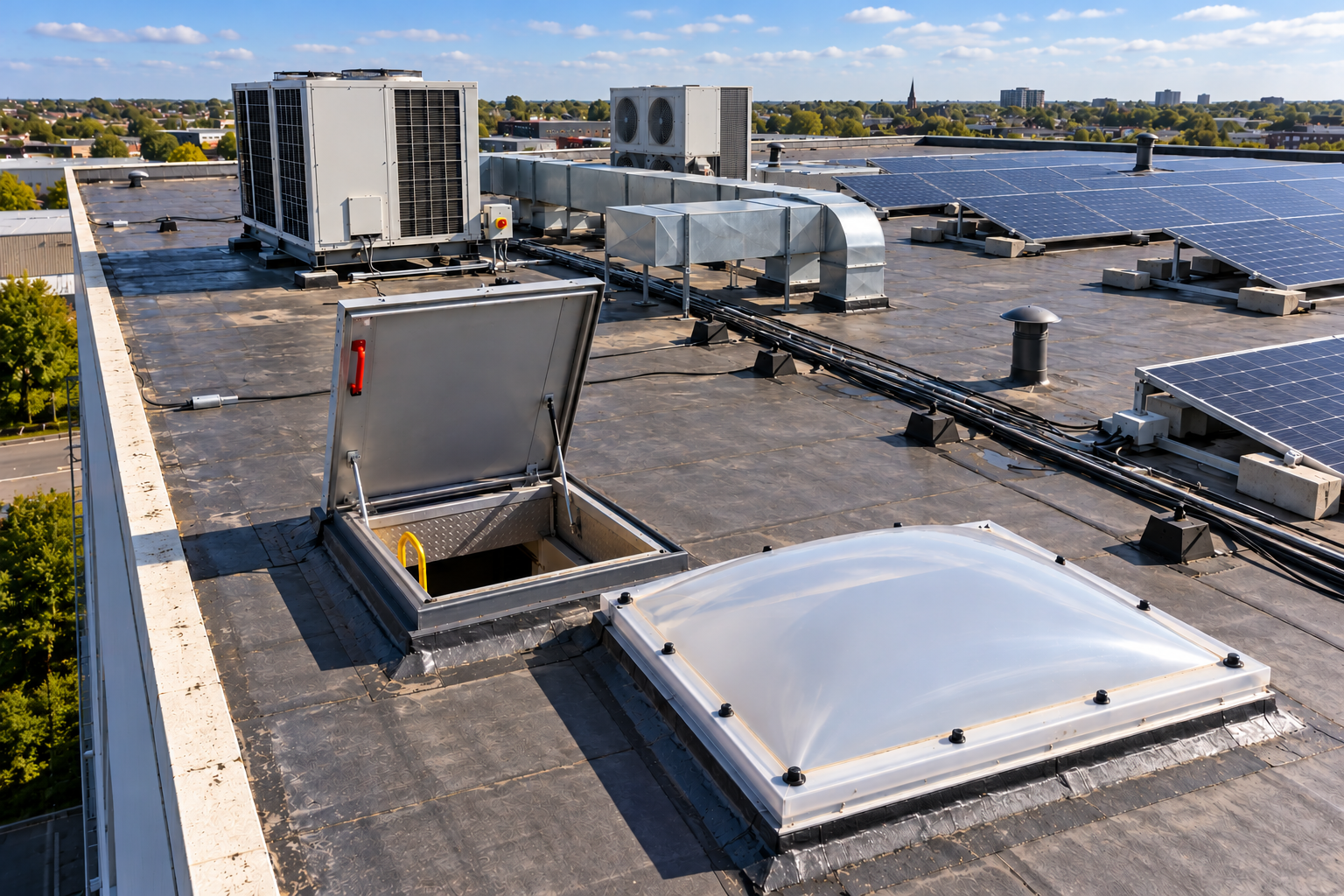
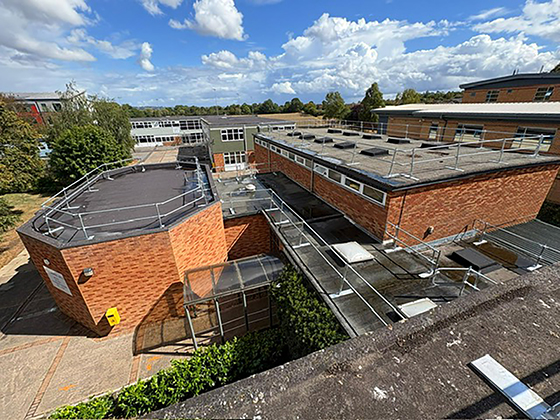
Getting onto a roof safely is important, but what happens once you’re up there? Are there safe access routes so people can move safely around the roof?
Commercial and industrial roofs house equipment that needs regular inspection, servicing and maintenance. HVAC units, solar panels, ventilation systems, and other rooftop plant all need maintenance teams and contractors to move safely between areas.
But roofs aren’t always designed for easy access. Unprotected edges, fragile rooflights, slippery surfaces, level changes, and obstacles can all make roof access hazardous.
So, how can you create safe access routes that allow people to reach the areas they need to work on?
Start by understanding how your roof is used
Before deciding which roof safety system you need, think about who needs access to your roof, where they need to go and how often.
An HVAC engineer may need to access your roof several times a year to inspect or repair your equipment, while solar panels may only need occasional access.
So before creating a safe access route, ask yourself:
- Who needs access to my roof, and how often?
- Which areas and equipment do they need to reach?
- Are there any fragile surfaces, rooflights or unprotected edges?
- Do obstacles like pipework, ducting or cable trays cause an obstruction?
- Are there changes in level? roof have changes in level?
- Do you already have a fall protection system, and is it suitable?
A professional rooftop survey will help to spot hazards, assess existing arrangements and determine the most appropriate solutions.
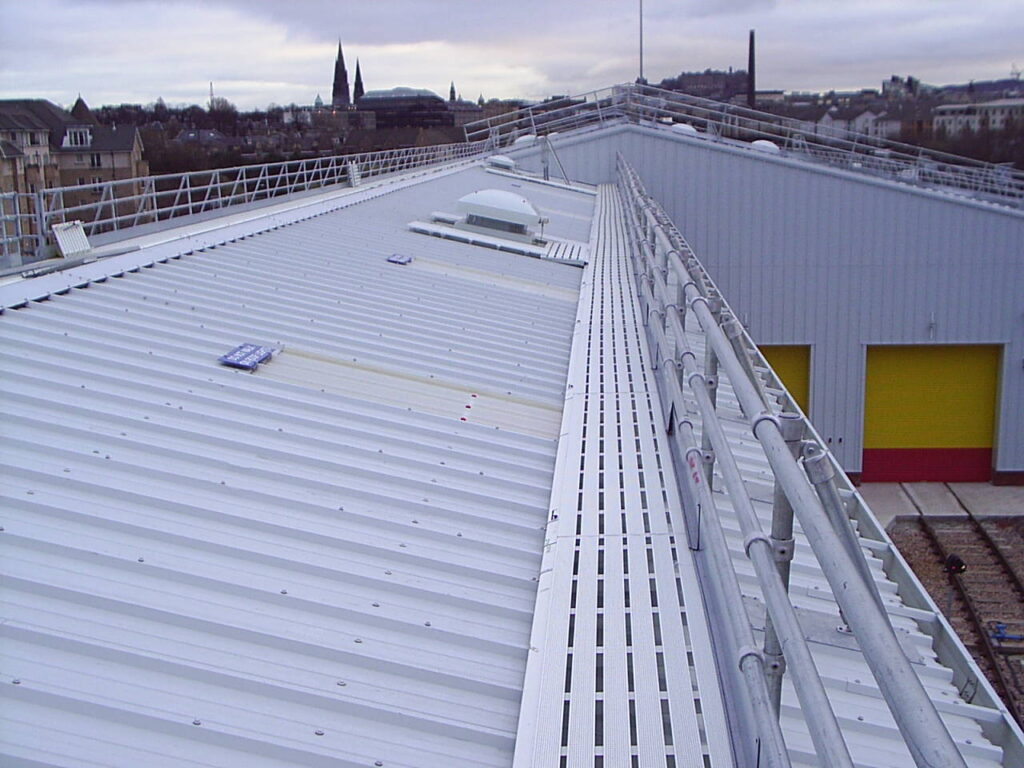
Create designated routes with rooftop walkways
Not all roofing materials can handle regular foot traffic. Repeated access can damage roof coverings, while wet or uneven surfaces can increase the risk of slips and trips.
Rooftop walkways create clear routes across the roof, helping workers reach equipment without walking directly on vulnerable roof surfaces.
Depending on the roof type and system selected, walkways can:
- Provide a clear, defined route to rooftop plant and equipment.
- Distribute pedestrian loads evenly and help protect the roof covering from repeated foot traffic.
- Provide improved grip to help reduce the risk of slipping.
- Guide workers away from hazards.
- Be integrated into other roof safety systems such as guardrails or lifelines.
- Be designed for different roof types and configurations, creating practical access routes for regular maintenance.
But, and it’s an important BUT, walkways don’t provide fall protection on their own. When routes pass near unprotected edges or other fall hazards, you may need additional safety measures.
Protect workers with rooftop guardrails
One of the biggest hazards when moving around a roof is the risk of falling from an unprotected edge.
Rooftop guardrails provide collective fall protection, helping prevent falls without requiring individual workers to attach themselves to a personal fall protection system.
Guardrails can be installed around roof perimeters, designated working areas and other locations where edge protection is required.
Depending on the roof construction and site requirements, solutions include:
- Freestanding guardrails: These use counterweights rather than mechanical fixings to the roof structure. They’re particularly useful when you don’t want to penetrate the roof membrane or structure.
- Fixed guardrails: As the name suggests, these are mechanically attached to a suitable supporting structure and may be appropriate where freestanding systems aren’t practical or possible.
Both systems can be incorporated into a wider roof safety design, allowing workers to move between access points and maintenance areas.
The most suitable option depends on the building, roof structure, and risks identified during the roof assessment.
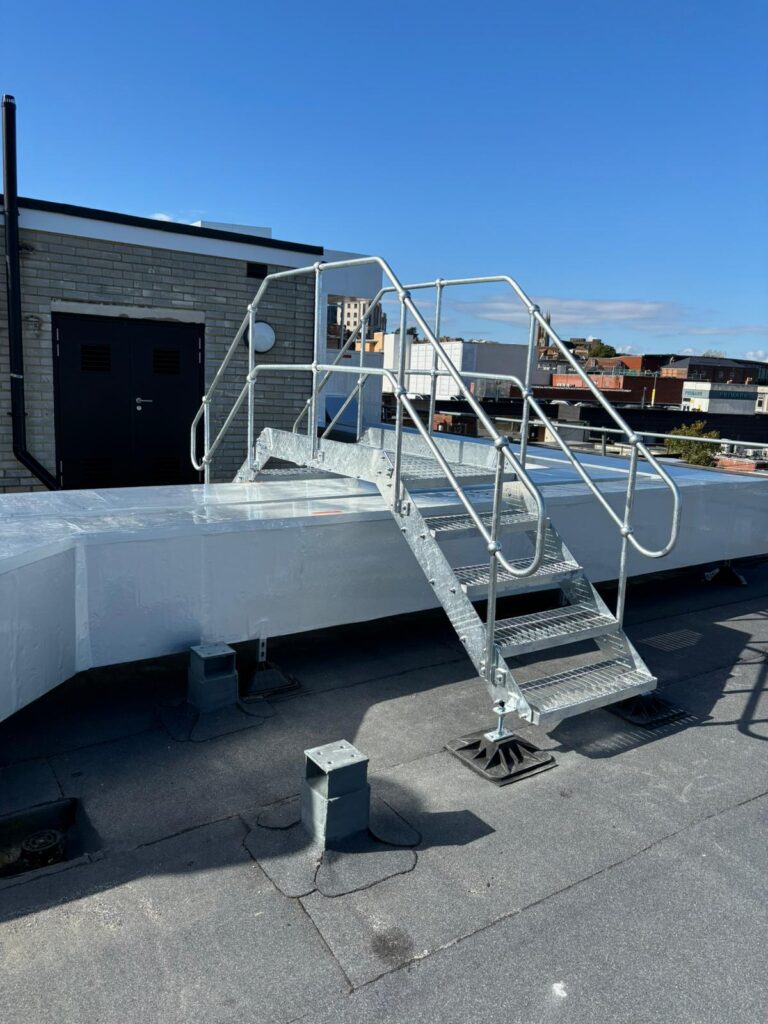
Overcome obstacles with step-over platforms
You can’t always create a completely unobstructed route across a roof.
Pipework, ducting, cable trays and other equipment can create trip hazards or force workers to take alternative routes, potentially moving them nearer to unprotected edges or other dangers.
Step over platforms provide a designated route or obstacle, allowing workers to move safely between different areas without climbing over equipment.
They can be designed and fabricated to accommodate specific obstacles, roof layouts, and level changes. For example, a bespoke step-over platform could provide access over a large section of ductwork or between two different height roof levels.
Platforms create a more practical access route while cutting down on the need for workers to navigate around obstacles or take unnecessary risks.
Don’t forget about fragile rooflights
Many commercial and industrial buildings have rooflights, which let natural light into the building. But these be a serious fall risk. According to the HSE 22% of all fatal falls from height in the UK construction industry (which includes maintenance) involve falls through fragile surfaces, particularly rooflights. Old rooflights can become brittle, and even those that appear sturdy may not support a person’s weight.
If rooflights are close to the route taken by maintenance engineers, you need to protect people from a potential fall through the rooflights. Rooflight covers can provide a physical barrier to help protect people working or walking near the fragile structures. can provide a physical barrier to help prevent people from falling through fragile rooflights.
Think about how workers get onto and off the roof
Safe roof routes are only part of the solution. Workers also need a safe way to reach the roof and move from the access point onto a safe route.
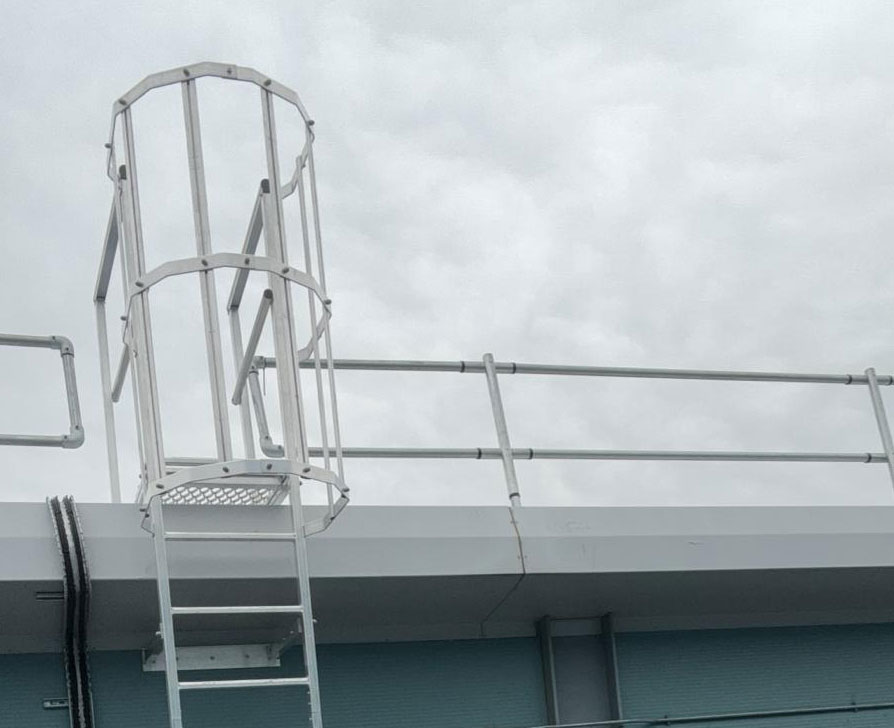
Fixed access ladders provide permanent access where needed, especially for buildings that require regular rooftop maintenance. But the ladder’s position and roof access need careful planning.
Depending on the building and roof layout, additional measures may be needed, such as:
- Suitable handholds and landings for additional protection.
- Guardrails around access points to protect workers as they move between the ladder and rooftop.
- Self-closing safety gates to protect the opening.
- Designated walkways leading away from the access point.
These can help ensure workers are protected from the point where they access the roof to getting to the equipment they need to maintain.
Bringing roof safety systems together
Every roof is different, so there’s no single solution that works for every building.
A large industrial roof may require designated walkways leading to multiple maintenance areas, with guardrails protecting exposed edges and step-over platforms providing access over rooftop equipment.
Another building may need a bespoke access ladder, guardrails and rooflight protection.
The important thing is to look at the complete access route rather than treating each hazard in isolation.
By planning how people get onto your roof, move around, and leave, you can create a safer, more practical environment for everyone who needs access.