A hard hat is probably one of the most critical items of personal protective equipment (PPE) used on construction sites and during work at height. And, as with most items of PPE, it has a limited service life. Even if it looks to be in good condition, exposure to sunlight, temperature changes, chemicals, and everyday wear can gradually reduce its protective performance. Some damage will be obvious; others not so much.
That’s why knowing when to replace a hard hat, how to inspect it correctly, and why following the manufacturer’s guidance matters is an important part of keeping people safe while working at height.
Hard hats don’t have an expiry date
One of the most common misconceptions is that hard hats have a clearly marked expiry date.
That’s not the case. Most safety helmets display the date of manufacture, not an expiry date.
The lifespan of the helmet is determined by the manufacturer, taking into account the materials used, the intended application and expected environmental conditions. This means there isn’t a single replacement period that applies to every hard hat, but most manufacturers state between three and five years.
If the hard hat has never been worn, it must be changed when it’s passed the recommended lifespan.
You should always refer to the manufacturer’s instructions for the recommended service life of your helmet.
Why hard hats need replacing
Hard hats are designed to absorb the force of an impact and protect the wearer from serious injury. This could be from a fall, or an object falling onto the hat. However, over time, the material used in its manufacture will start to degrade. And that means the protection is compromised.
Typical factors that can shorten a hard hat’s lifespan include:
- Prolonged exposure to sunlight and UV rays
- Extreme hot or cold temperatures
- Chemicals and solvents
- Dirt and general site contamination
- Everyday knocks and abrasion
- Poor storage
A big problem is that you can’t always see deterioration. A helmet may appear in good condition, but that doesn’t mean it will provide the level of protection it was meant to give.
For this reason, helmets should be replaced in line with the manufacturer’s recommendations, even if there is no obvious damage.
Replace your helmet after an impact
Any hard hat that has been subjected to an impact must be replaced immediately.
Safety helmets are designed to absorb energy during an impact. Once that energy has been absorbed, the shell or internal components may have been compromised, even if no cracks or visible damage can be seen.
How to inspect a hard hat
As with any safety equipment, a hard hat should be inspected before each use. A thorough inspection should also be carried out regularly.
Check both the shell and the internal suspension system for signs of damage or deterioration.
Look out for:
- Cracks, splits, dents, or distortion which can weaken the hat.
- Fading or brittleness from UV damage
- Damaged straps or adjustment mechanisms
- Loose fittings
- Signs of chemical contamination or burns
If there’s any doubt about the condition of the helmet, replace it.
The cost of replacing PPE is insignificant compared with the consequences of a serious head injury.
Caring for your hard hat
Looking after a hard hat properly can help maximise its service life.
Helmets should be cleaned using warm water and mild soap. You should avoid using solvents, harsh chemicals, and abrasive cleaning products because they might damage the shell.
Store the helmet in a cool, dry location away from direct sunlight or excessive heat. Hard hats should not be left exposed in your vehicle during hot weather.
Understanding safety standards
Industrial safety helmets in the UK must be manufactured to EN 397:2025, the recognised standard for industrial safety helmets. This specifies performance and design requirements relating to shock absorption, penetration resistance, flame resistance, and other criteria intended to protect workers in dangerous environments.
EN12492:2025 is the standard for helmets used for mountaineering, climbing, and work at height activities. The standard specifies safety requirements and test methods. A key feature of the standard is that the helmet must feature a chins strap to help keep the helmet firmly on your head during a fall.
You should always ensure the PPE you select is suitable for the work being carried out and complies with the relevant product standard.
It’s important to understand that modifying the hard hat can affect its integrity. Manufacturer-approved modifications are OK, but don’t drill holes or use paints or adhesives which can weaken the shell and compromise impact protection.
Hard hats are only one part of working safely at height
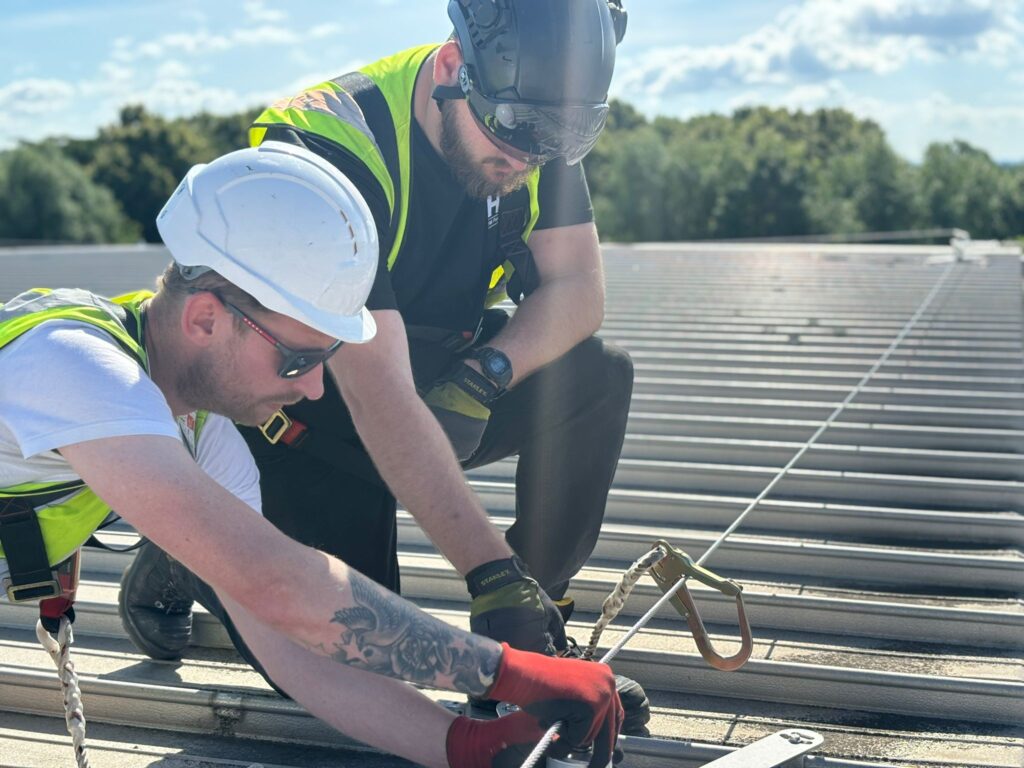
Although hard hats deliver vital head protection, they play only a small part in preventing injuries when working at height.
Under the Work at Height Regulations 2005, the priority should always be to prevent falls occurring in the first place by following the hierarchy of control.
Hard hats protect from head injuries, but they cannot prevent someone falling from a roof. They should always be used in conjunction with appropriate fall protection measures, suitable training, and safe working procedures.
Need advice on working safely at height?
We work with trusted manufacturers to provide durable, compliant safety equipment suitable for construction, utilities, rail, and industrial applications.
Our team understands the importance of proper PPE selection, maintenance, and replacement, helping businesses create safer workplaces for their employees. As part of our annual inspection service, we will inspect all PPE, including hard hats, associated with your safety systems.