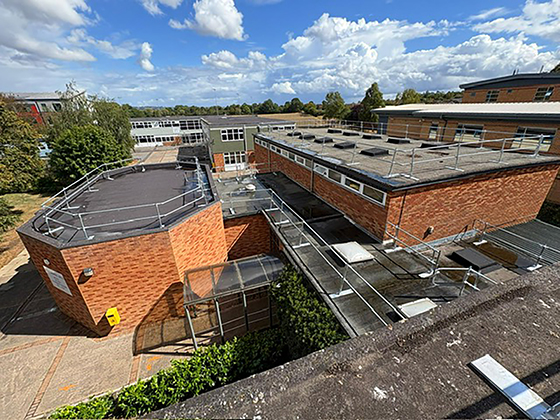
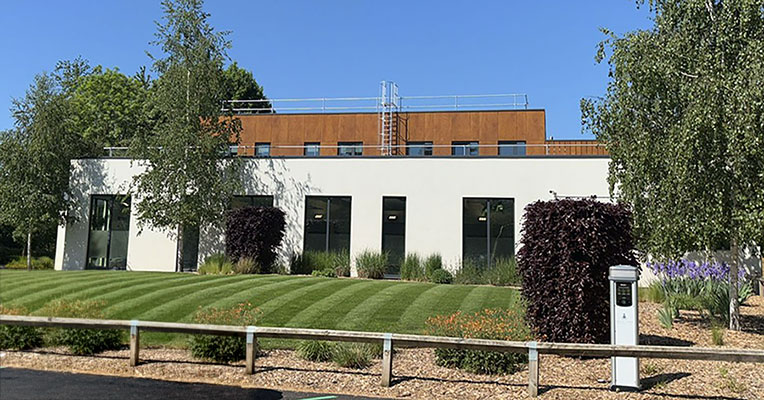
Working at height remains one of the most dangerous activities carried out across commercial, industrial, and construction environments. Every year, serious injuries and fatalities occur because of falls from height, rooftops, fragile surfaces, poor roof access, or inadequate fall protection equipment.
If you’re a building owner, facilities manager or responsible for commercial properties, you have a duty to protect people working on your roofs. It doesn’t matter if they’re maintaining or installing solar panels, HVAC systems, cleaning gutters or skylights, inspecting or surveying the roof; you are responsible for their safety.
Why roof safety systems are so important
Not all hazards on a roof are immediately obvious. Clearly unprotected edges are dangerous, but not everyone knows about the hidden dangers of fragile surfaces and rooflights. Changes in level, rooftop plant and slippery surfaces can also increase the possibility of accidents.
With more and more companies looking at ways to become greener and reduce energy costs through solar installations, maintenance teams need to access roofs more frequently. And when you consider that more than half of all construction (which includes maintenance) fatalities are caused by falls from height, it’s clear why roof safety systems are so important.
What are the different roof safety options?
Every roof is different, with different layouts and access requirements. And that means different risks, which is why your roof safety solution needs to be designed for the specific hazards.
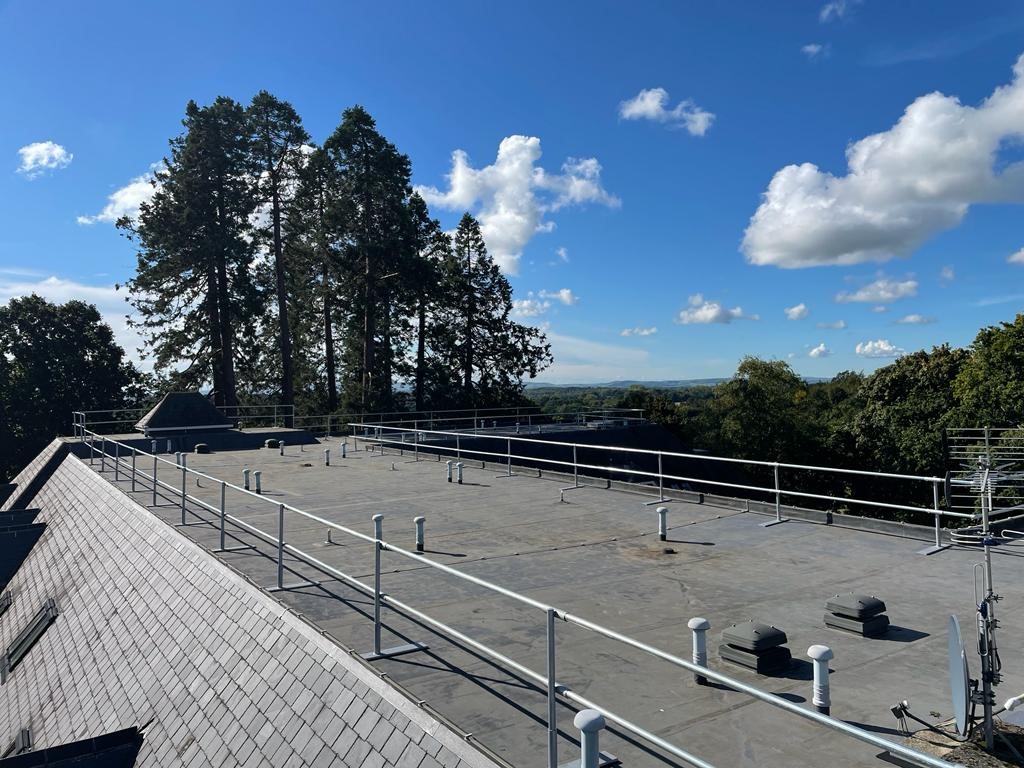
Of course, the safest approach is to remove the need to work at height. This could be done by relocating equipment to ground level, but this is not always possible. If rooftop access is unavoidable, then the preferred option is to install collective equipment such as guardrails. The benefit of these systems is that they protect people as soon as they step onto the roof and allow workers to move about freely without having to clip onto personal fall protection equipment. Businesses tend to prefer these systems as they don’t require user interaction, specialist training, or equipment.
Collective protection is not always possible, and not everyone wants a guardrail sticking up from their roofs. In these cases, personal fall protection such as a lifeline system can be used. Horizontal safety lines can be designed as either fall restraint or fall arrest, with fall restraint being the recommended solution.
Fall restraint systems use harnesses, lanyards, anchors, and horizontal lifelines to allow workers to move freely around the roof. The key feature is that they stop the user from physically reaching a hazardous edge.
When workers need to approach roof edges or work in exposed areas, a fall arrest system may be required. These systems do exactly what the name suggests: they arrest a person who is falling. Fall arrest systems should be the last resort, as they must only be used by people trained in work at height and in their correct use. Emergency rescue procedures must also be in place so the suspended worker can be recovered safely.
Safe roof access is just as important
There’s no point installing fall protection systems if access to the roof or across it is unsafe. These are one of the most overlooked issues on a roof. Rooftops today are cluttered areas, which means workers often have to navigate obstacles, uneven surfaces and cluttered routes, often while carrying tools or equipment.
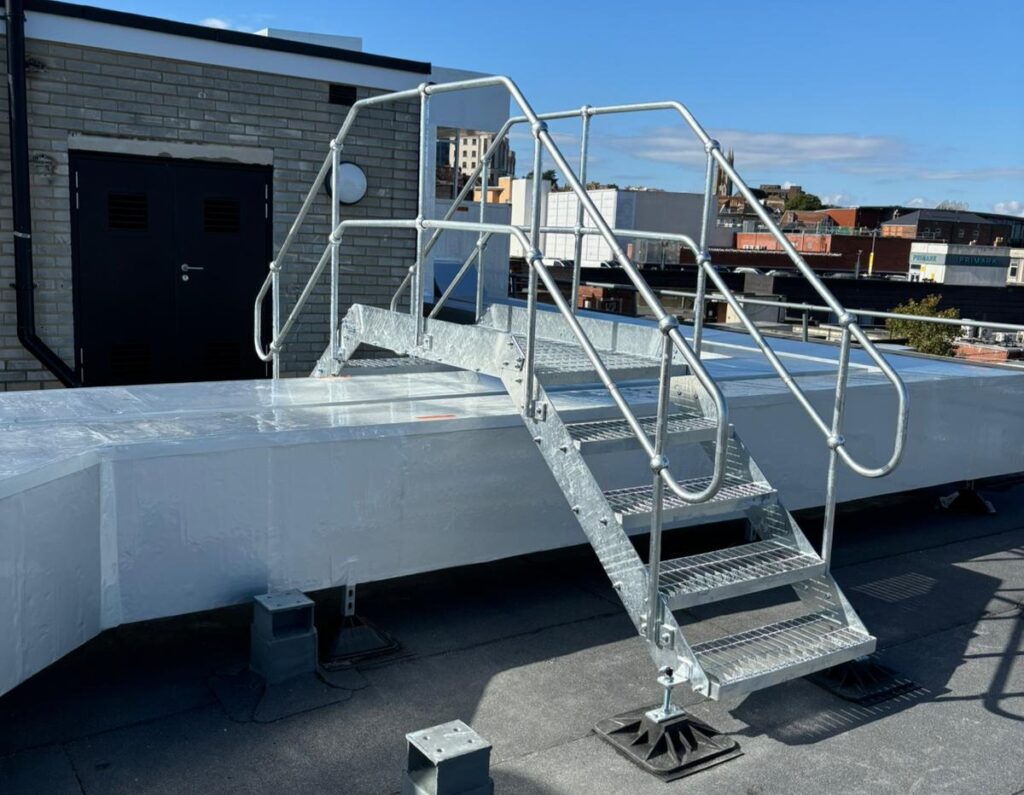
Fixed access ladders with self-closing safety gates enable safe access onto and off a roof, while step-over units provide a safe route over obstructions such as cable trays and ducting. Rooftop walkways create a clear, non-slip route across the roof, while protecting the roof itself from foot traffic damage.
Properly designed roof access systems provide safer routes while lowering the chance of trips and falls. These are particularly important on larger commercial roofs where there can be multiple hazards.
Training is also essential
Even the best roof safety systems rely on people using them correctly.
Anyone accessing a roof should receive appropriate training so that they understand the hazards, know how to use any personal fall protection equipment correctly and are familiar with the site’s safe working procedures.
This is particularly important where lifeline systems or fall arrest equipment are installed, as users need to know how to connect safely, move around the roof while remaining protected and understand the limitations of the system.
Training should also cover recognising roof hazards such as fragile rooflights, changing weather conditions, trip hazards and safe access routes.
Providing the right training, with a well-designed roof safety system, helps reduce the chance of accidents and ensures people can work at height safely and confidently.
Supporting compliance
Installing a roof safety system is only part of the process.
Under the Work at Height Regulations, duty holders must ensure systems are properly maintained and inspected by a competent person.
Annual inspections and recertification help confirm that guardrails, lifeline systems and other fall protection equipment remain safe to use and continue to comply with current standards.
Keeping accurate inspection records also demonstrates compliance and provides reassurance that systems will perform as intended if they’re ever needed.
Long-term benefits for businesses
Permanent roof safety systems also simplify future maintenance work. Contractors can access rooftops more efficiently when reliable man anchors, guardrails, walkways, and lifelines are already in place. This reduces setup time and improves productivity while helping jobs remain on schedule.
Durable systems also provide long-term value by protecting rooftops without compromising the building structure. Many modern systems are specifically designed to minimise roof penetration while maintaining strong attachment points and long-lasting performance.
As commercial buildings continue to incorporate solar installations, rooftop plant equipment, and renewable technologies, the importance of effective roof safety systems will only continue to grow.
Installing roof safety systems
Working at height continues to be one of the biggest safety risks across UK workplaces. Every year, people are seriously injured or killed after falling from roofs while carrying out routine maintenance, servicing plant equipment or inspecting solar panels.
For building owners, facilities managers and those responsible for commercial properties, installing the right roof safety system isn’t simply about complying with legislation. It’s about creating a safer setting for everyone who needs access to the roof.