What’s the difference between edge protection and fall protection? Which system do you need?
Falls from height continue to be one of the main causes of serious injury and death at work, accounting for about a quarter of all fatal workplace injuries in the UK each year. But these falls are largely avoidable with the correct roof safety and fall protection strategy. But what system should you specify? Edge protection or fall protection.
Both are often referred to when it comes to roof safety, but how they protect people is completely different.
What is edge protection?
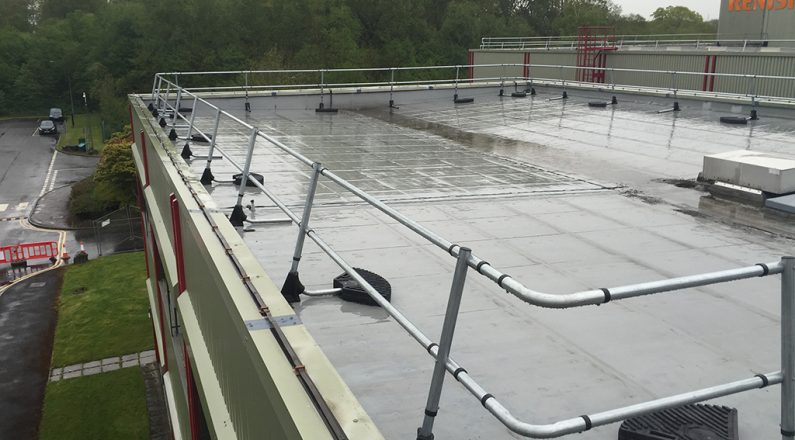
Edge protection is often referred to as collective protection. It provides a physical barrier at the edge of a structure to stop a fall from happening in the first place. It doesn’t rely on any action from the worker and protects everyone in the area the moment they step onto the roof. And crucially, it provides protection without the need for training or specialist equipment.
Common edge protection systems include:
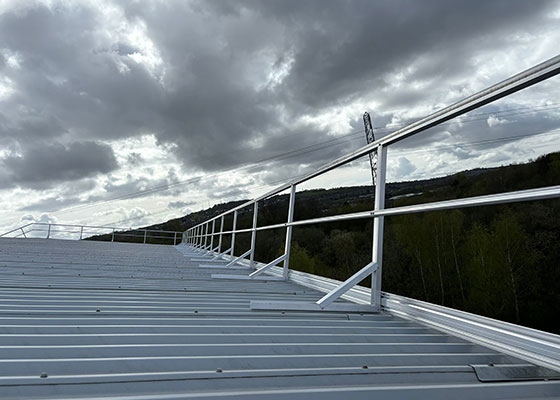
- Fixed guardrails, permanently installed on rooftops such as metal profile and standing seam.
- Freestanding guardrails, which avoid penetrating the roof surface and protect roof warranties.
Collapsible guardrails, which fold flat when not in use, ideal when you don’t want a guardrail sticking up from the roof all the time. - Temporary edge protection for construction sites
Edge protection is the perfect solution for buildings needing regular maintenance or inspection access. This could be to the roof itself or equipment such as solar panels installed on it. A benefit of edge protection systems is that they can be adapted to suit flat roofs, low-sloped roofs, and a range of parapet configurations.
What is fall protection?
Fall protection is an active system, designed to reduce injury if a fall occurs, or to stop a worker reaching a hazardous area at all. Unlike edge protection, it depends on correct use, proper training, and well-maintained equipment.
Fall protection falls into two categories:
- Fall restraint, which stops a worker from reaching a fall hazard in the first place.
- Fall arrest, which safely stops a fall that’s already started.
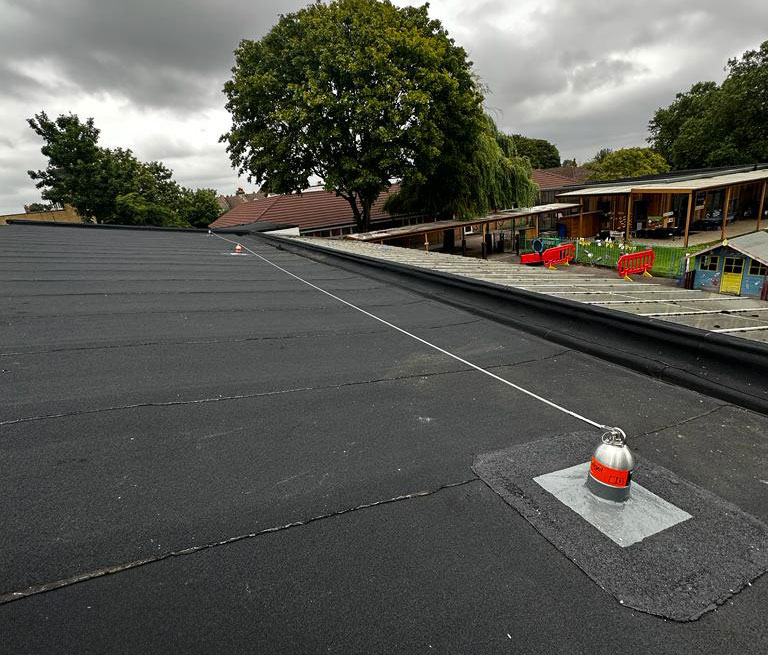
Typical equipment includes safety harnesses, lifelines and anchor points, lanyards with energy absorbers, and fixed anchor systems. Once connected to a system, the workers can move freely around the roof with hands-free protection.
Fall protection tends to come into its own where a physical barrier isn’t practical. This could be because of the roof layout, lack of room, aesthetic reasons or for short-term and temporary work. But you need to be very clear about the difference between restraint and arrest.
It’s worth emphasising this again, as people are still confused about the difference.
Restraint prevents the fall. It physically stops a worker getting close enough to the edge to be at risk.
Arrest manages the fall. It lets the fall happen, then stops it safely before the worker reaches a lower surface.
What’s the key difference between edge and fall protection?
Edge protection removes the hazard. Fall protection manages the consequences if prevention isn’t possible.
Edge protection is passive and protects everyone in a defined area once it’s installed. Fall protection is active, individual, and only as effective as the training and equipment behind it.
Which one is best for your roof?
This depends on your roof layout, how often access is required, the type of work being carried out and the level of risk.
Edge protection is always the preferred solution because of the protection it provides.
But if edge protection isn’t possible, then fall protection is best for short-term or specialist work.
In some instances, you may need a combination of the two. Edge protection to secure the leading edge or fall hazard, with fall protection for specific tasks that require work close to the edge.
A thorough risk assessment will help confirm the right approach for your building.
If you’re not sure whether edge protection, fall protection, or a combination of both is right for your building, we’re here to help.